Swoosh Reimagined: Nike's Boldest Edits of Iconic Logo
PublishedQuick Facts
- Nike’s iconic Swoosh was created in 1971 by Carolyn Davidson
- It would not take long for Nike to start playing with the logo’s look
- Even as the logo’s popularity grew, there was always a desire to… Tinker
- Some variations of the Swoosh are becoming as iconic as the original
This content may contain affiliate links. If you make a purchase through these links, we may earn a commission.
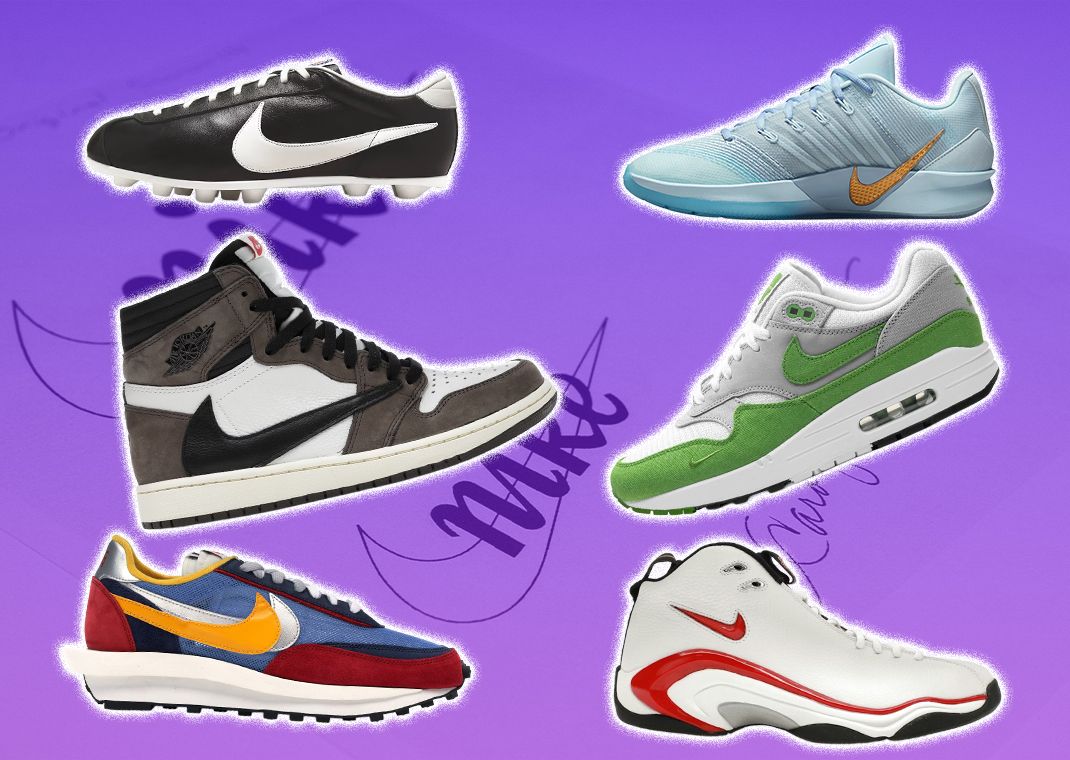
To say that Nike’s Swoosh is a Top 10 or a Mount Rushmore logo at this point in its history might actually be selling it short. There might not be a more recognizable and successful corporate branding mark before or since. Designed to convey the wing of the Greek goddess of victory, Nike, the Swoosh has become not only a symbol of excellence but of validation as well.
From early childhood, kids in youth sports are conditioned by advertising and parents who didn’t wear Nike at their schools to believe that when their gear has the Swoosh, they are the best. That early indoctrination bleeds into the rest of their lives, where the brand of the socks has to match the sneakers, the logos on the shirts can’t clash with the backpack, and the school they choose later in life needs to align with their preferences. By the time they’re out in the real world, the Swoosh is an integral part of their lives.
The Swoosh might be a monolith, but it has also taken on many different looks since its inception in 1971 by Carolyn Davidson. Despite the Swoosh being so visually striking and distinct from competitors, there was movement early on to switch things up internally. Even as the logo grew in stature, Tinker Hatfield and other designers at Nike were coming up with sneakers that either deemphasized the Swoosh, changed the presentation, or took it out altogether. These edits to the Swoosh have become so prevalent that they are becoming as iconic as the original.
THE Swoosh
Examples: Everything Nike has ever done
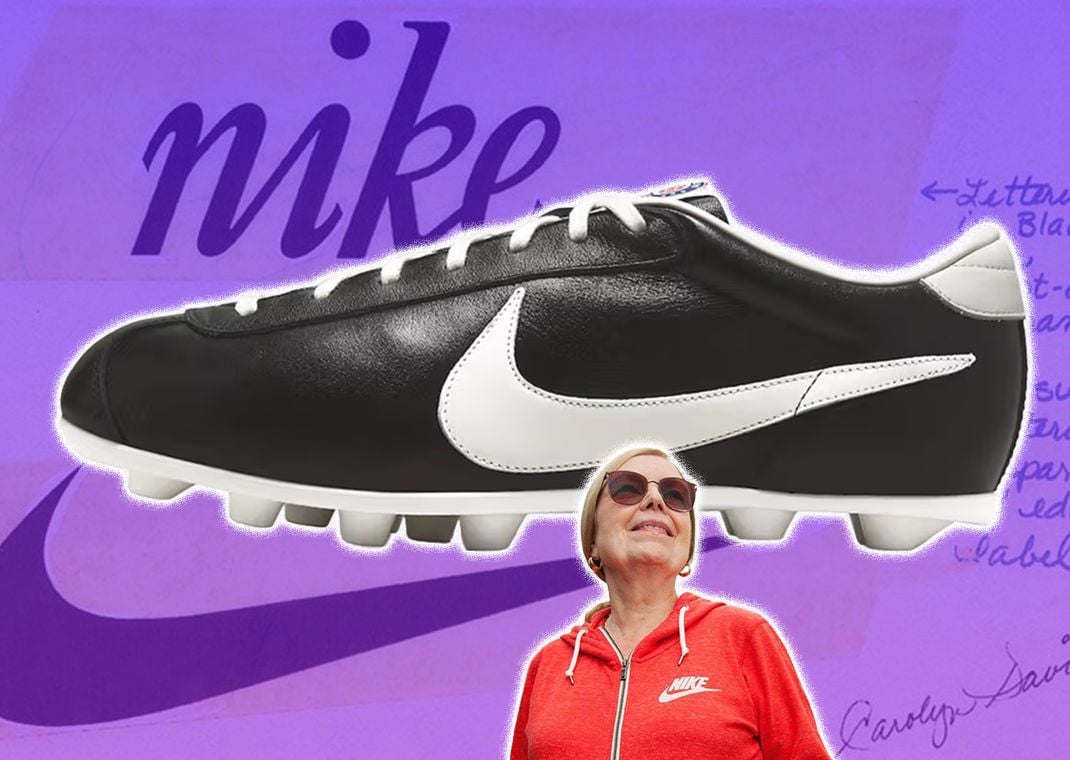
The story of the Swoosh is the stuff of legend, even if Phil Knight didn’t initially believe it to be a big deal. Designed by Carolyn Davidson, a graphic design student at Portland State University, the Swoosh was conceived over 17 and a half hours for $35 (Davidson’s rate was $2 per hour). With guidance that it had to convey speed and it couldn’t look anything like adidas’ Three Stripes, Davidson produced several sketches that would be looked over by Knight and Nike’s first employees. In need of a mark that would go on the company’s first shoe - a soccer boot called the Nike - Knight and Nike’s first employees went with what they thought was the “least bad” of Davidson’s sketches. Thankfully, when Nike took off with the “least bad” of Davidson’s work, Knight gifted her a gold Swoosh ring with an embedded diamond and 500 shares. Today, those shares are worth millions of dollars, but that ring might be worth even more considering all these money launderers collectors paying big money for memorabilia as they look for the next big thing to shamelessly parade around on a chain at a red carpet invest in.
Pinwheel/Sunburst
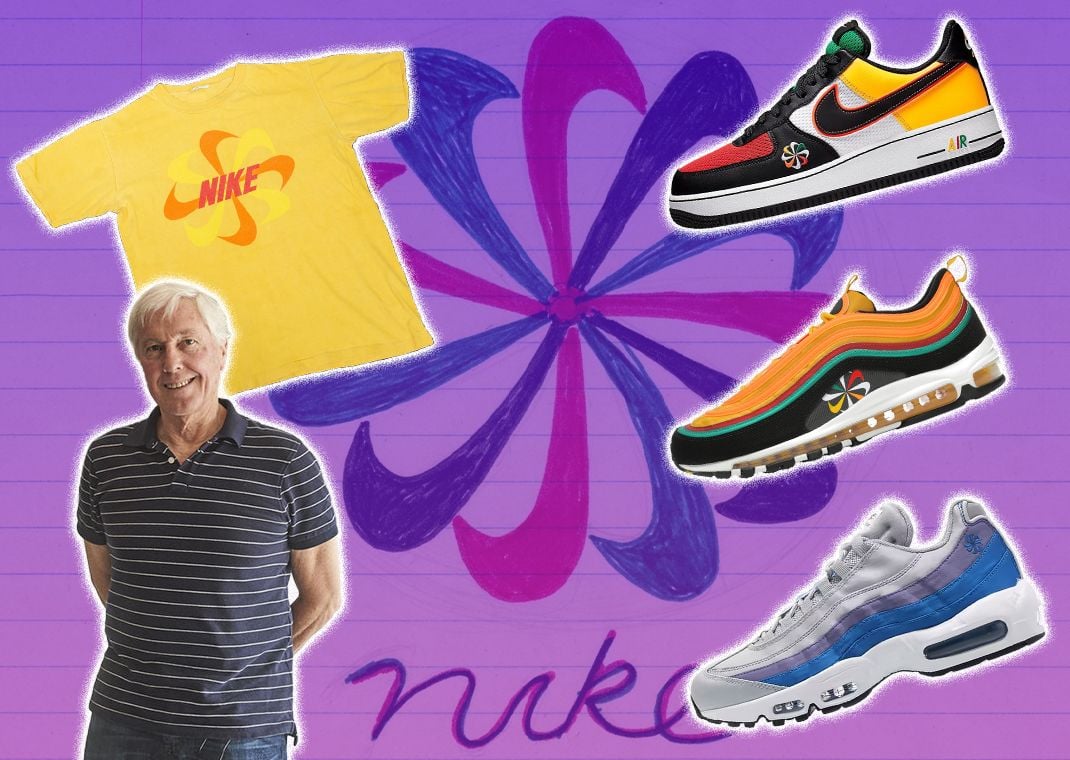
Examples: Nike Pegasus, Nike Air Force 1, Nike Air Max 95, Nike Running Apparel
In not-so-subtle ways, Jeff Johnson was a Swoosh hater. Johnson was Nike’s first official employee, and he was one of the people in the office when they picked the “least bad” of Carolyn Davidson’s sketches for what would become Nike’s logo. It was not the end of Johnson’s “beef” with the Swoosh, however, as he did not like the way the Swoosh looked on apparel. In 1972, he drew up a logo that looked like multiple Swooshes wrapped around a circle that, depending on your perspective, either looked like a burst of rays from the sun or an old school pinwheel toy. By 1976, artist Geoff Hollister refined the logo and Carolyn Davidson would implement the logo on apparel. Today, the pinwheel can be found on select Nike gear but occasionally they make their way onto sneakers to give them a whimsical look.
Jewel Swoosh
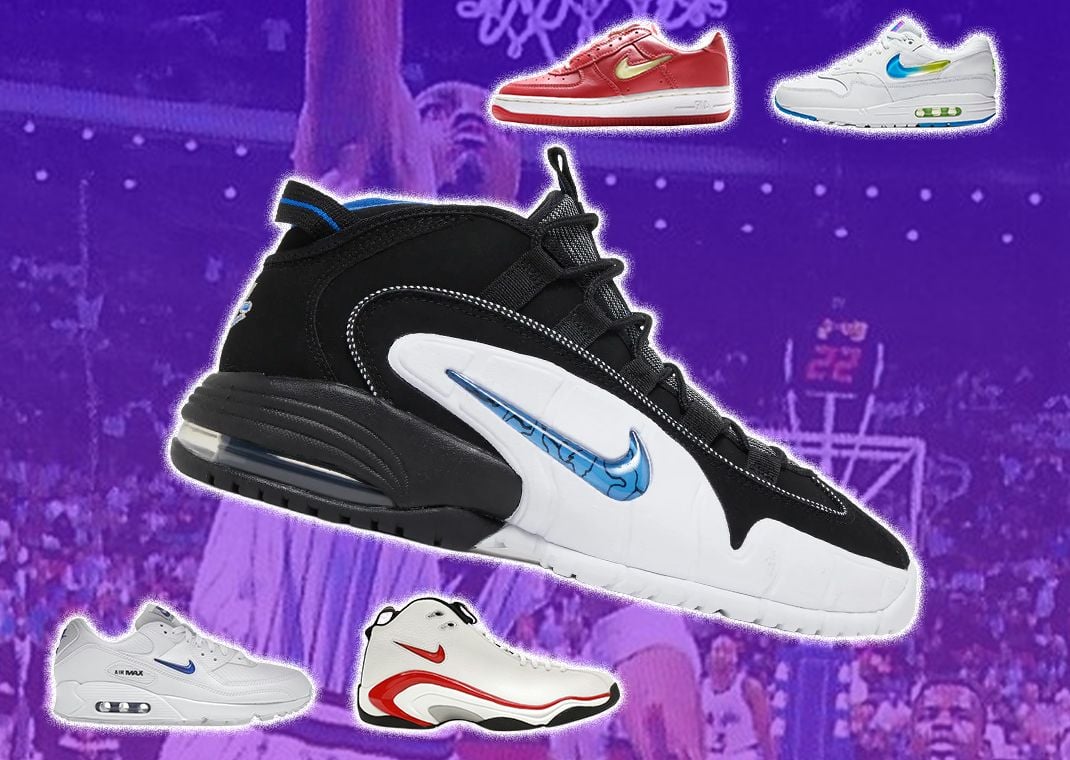
Examples: Nike Cortez, Nike Air Force 1, Nike Air Max Penny 1, Nike Air Pippen 2
The beauty of the jeweled Swoosh logo is that even though it technically takes up less real estate on the sneaker compared to your regular Swoosh that wraps around the ankle, they are not less visible. Instead of lying flat on the sneaker, the raised three-dimensional look gives it an appearance of almost popping out like a bird that’s ready to spread its wings. While many people credit designer Sean McConnell for his implementation of the jewel Swoosh on sneakers like the Nike Air Force 1 and then later on legacy silhouettes like the Cortez and Dunks, my personal memory of seeing a jewel Swoosh for the first time was on the Nike Air Max Penny 1. The blue Swoosh sitting atop either the Home and Orlando colorways made them instantly iconic.
Mutant Swoosh
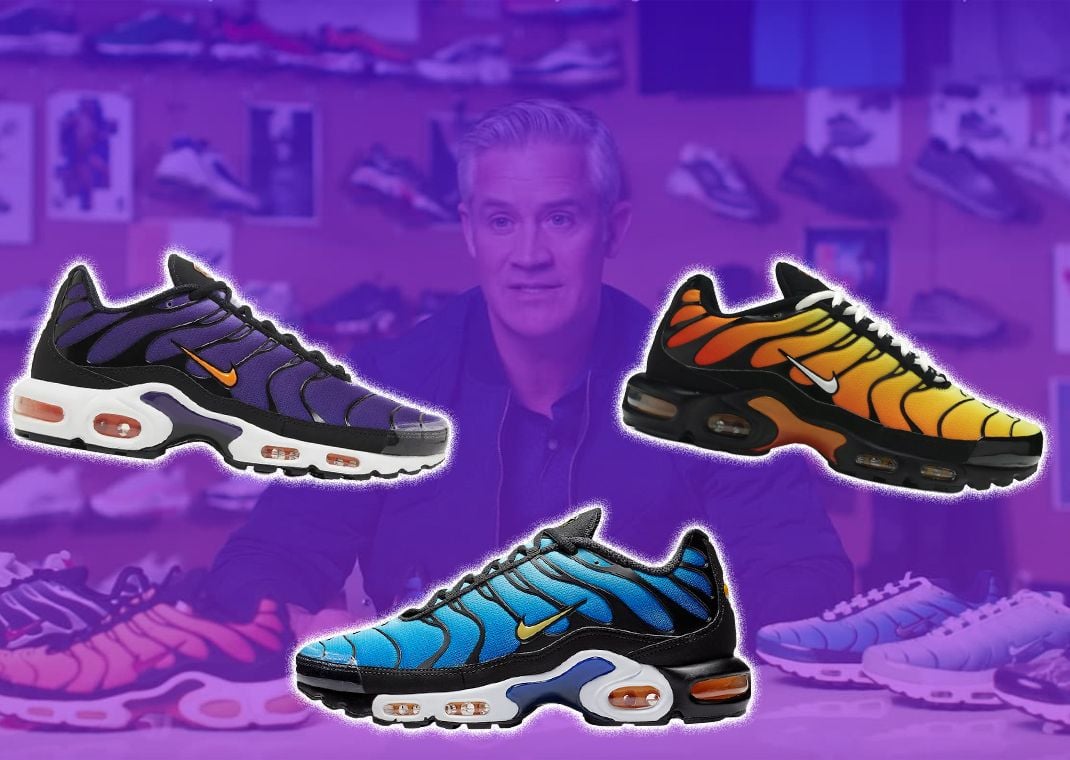
Example: Nike Air Max Plus
The story of the Nike Air Max Plus is one of corporate synergy, serendipitous design, and just winging it. In various interviews, Tuned Air 1 (one of the many names given to the Air Max Plus in its nearly 30-year history) designer Sean McDowell has stated that he drew the Swoosh incorrectly with a short head and a long tail. That sounds like something that should be in the employee handbook that Nike hands you when you’re first hired, but nevertheless, because of the way McDowell drew the Swoosh, the prototype that came back had the slightly discombobulated look.
There’s an alternate timeline where the Swoosh is “corrected” and the Air Max Plus isn’t as special, but because Nike was facing a deadline to create a Foot Locker-exclusive trainer and kids who saw the silhouette for the first time were thrilled, we’ve got a mutated Swoosh that looks less and less like one as the years go by and other designers leave their mark on the logo.
Multilayered Swoosh
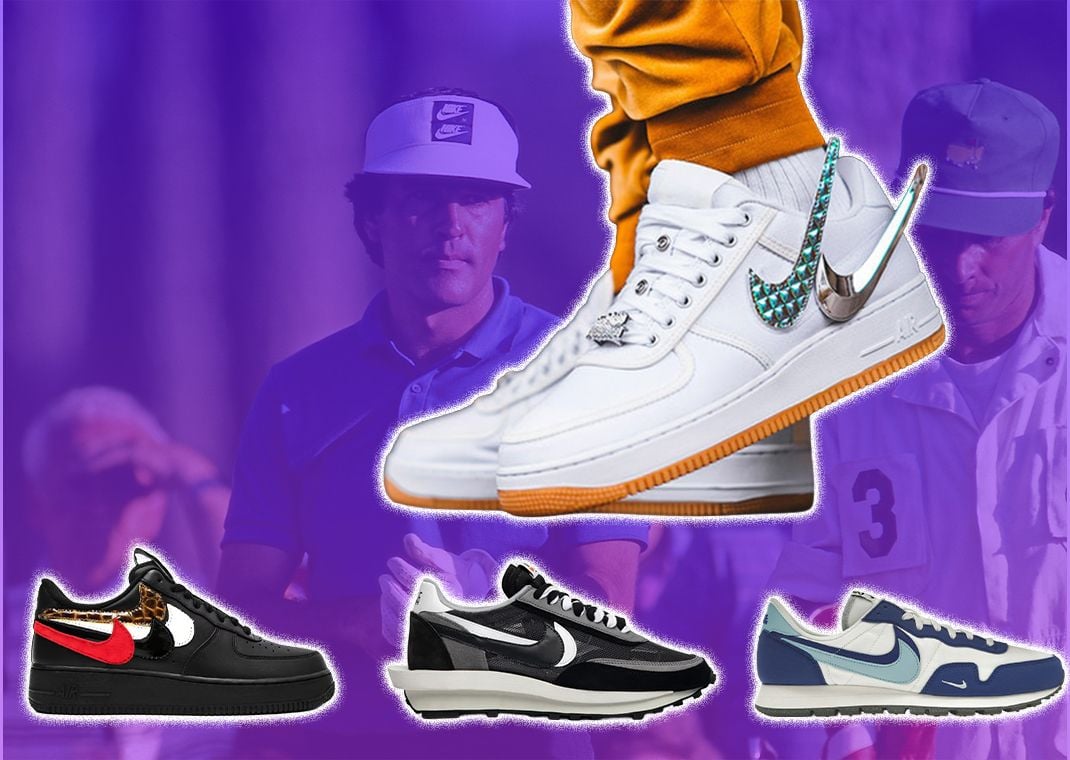
Examples: Seve Ballesteros, Sacai x Nike LD Waffle, Travis Scott x Nike Air Force 1 Low
No disrespect to Chitose Abe, John Geiger, Travis Scott, or any other Nike collaborative partner, celebrity endorser, or associate of Darrelle Revis, but more attention and respect needs to be paid to the true pioneer of the double Swoosh, the late Seve Ballesteros. During the 1986 Masters, Ballesteros cut the logos from his shirts to slap onto his pro shop-bought visor so that people could see the Nike logo all throughout the broadcast. The result is a double-Swooshed visor that has become the stuff of golf style legend.
While it would be silly to connect the Sacai x Nike LD Waffle or Geiger’s Misplaced Checks customs or Travis Scott’s Air Force 1s with velcro Swooshes to Ballesteros, the throughline that connects all of them is improvisation. Layering Swooshes on top of each other is not as simple as plastering them altogether and pricing them at double the retail price of an Air Force 1. There’s a level of artistry to the double, triple, or octuple Swoosh that few have been able to unlock, but count Ballesteros and Abe-san as those who are able to make it happen.
Factory Defective Swoosh
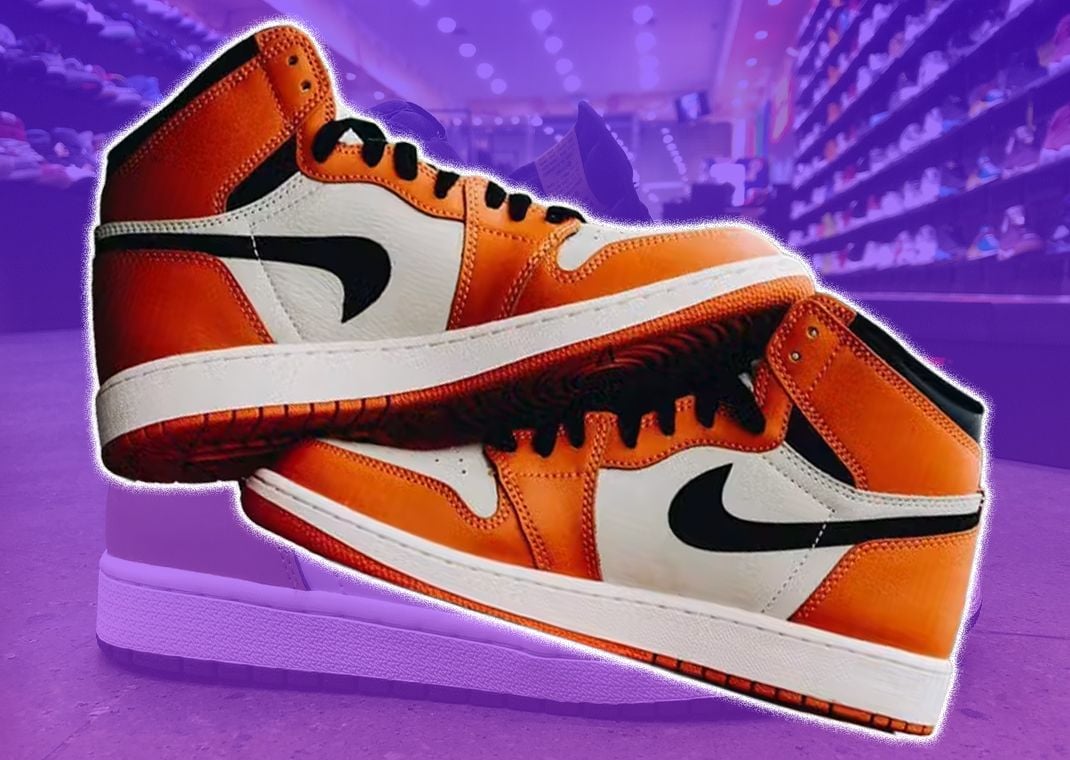
Examples: Air Jordan 1 Gold Toe, Air Jordan 1 Reverse Shattered Backboard
In 2006, designer Ari Saal Forman released the Ari Menthol 10s, a scathing commentary on Nike and the tobacco industry. With a resume that includes stops at both Nike and Big Tobacco, the sneaker was Forman’s critique about how the two entities have both contributed to and harmed culture in unspeakable ways. People who were around during that time will remember the sneaker for having an upside-down Swoosh that also happened to resemble the logo of Newport cigarettes.
While there are collaborations today that have used the upside-down Swoosh as a design choice, it’s when the flip is unintentional that causes people to think of those Menthol 10s and make them think they may have hit paydirt. In 2018, an Instagram user who went by mook.cool at the time received a pair of the Air Jordan 1 Gold Toe that had one shoe with an upside-down Swoosh. While that type of defect would normally mean a return to Nike in exchange for a regular pair, the sneaker was instead sold during the boom period of Jordan 1s for $96,000.
The following year, Nike released a follow-up to the Air Jordan 1 Shattered Backboard with Chicago-style color blocking called the Reverse Shattered Backboard. One pair with an upside-down Swoosh on the left shoe made it out of the factory and into the hands of a collector and resale shop owner in Italy. The asking price? $143,000. Sure…
Swooshless
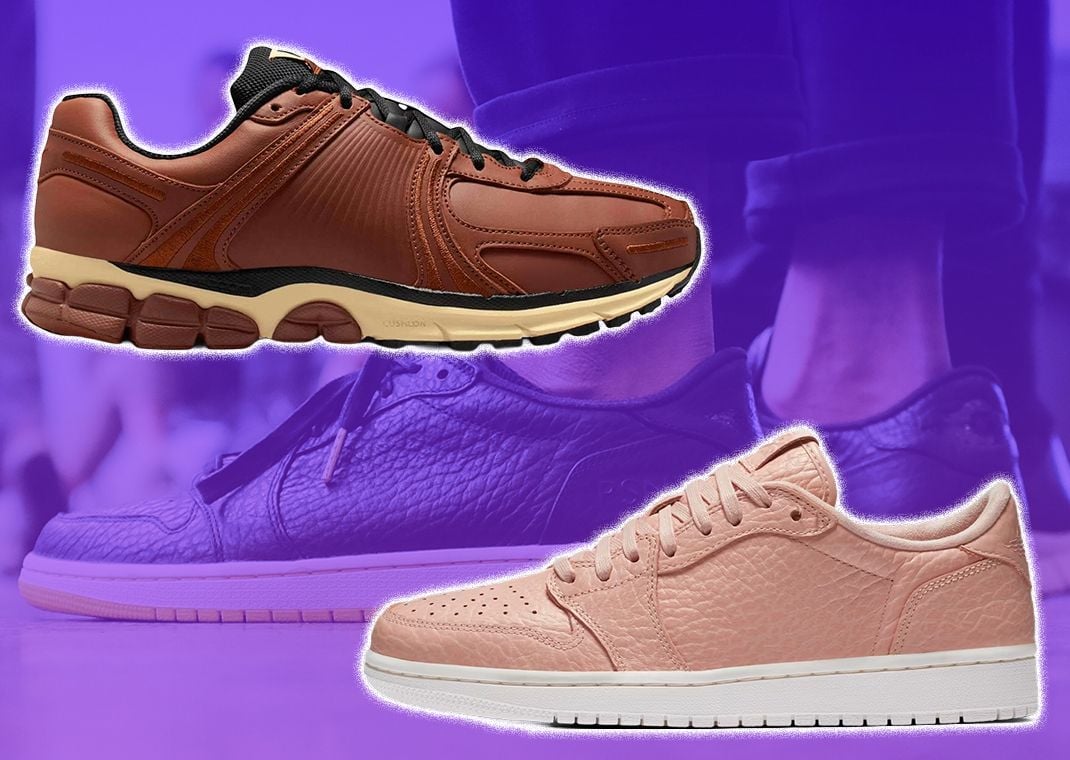
Examples: Air Jordan 1 Low, Nike Zoom Vomero 5, Nike Cortez
Note: This category is not meant for Nike sneakers that were intentionally designed without a Swoosh like the Nike Outbreak or the original Air Flight Huarache. We’re talking about iconic sneakers that have a Swoosh but were replaced with nothing but blank space.
There’s an inherent flaw with every Nike or Jordan Brand that takes out the Swoosh as a gimmick. Because these minimalist sneakers, from the Air Jordan 1 to the Nike Vomero 5, are designed with the Swoosh as the anchor that everything revolves around, the results are sneakers that feel hollow or clearly missing something. The Swooshless Air Jordan 1 is an especially interesting case because when they take out the Swoosh, the uppers have been updated to have a premium textured feel. As a result, they ironically end up looking like a typical luxury brand’s attempt at an Air Jordan 1.
Virgil Abloh’s Swoosh(es)
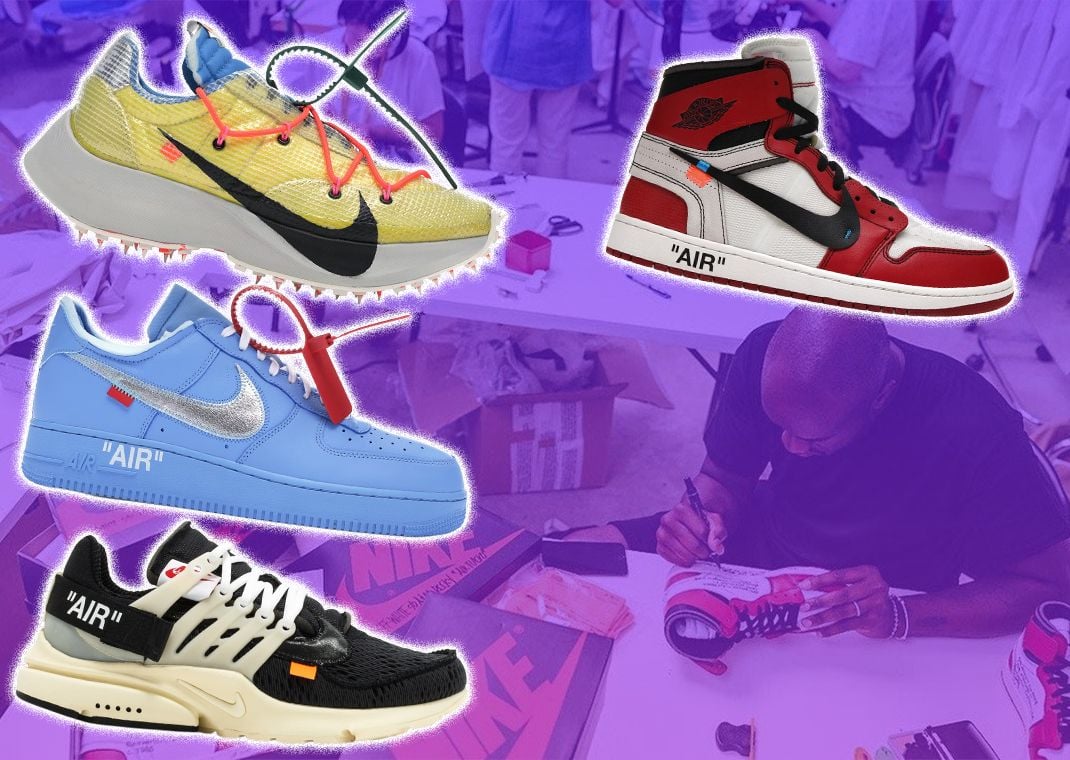
Examples: Off-White x Air Jordan 1, Off-White x Nike Vapor Street, Off-White x Nike Air Force 1
To this day, nobody has been able to “hack” Nike the way that the late Virgil Abloh did during his legendary run with the brand. When most people look at half-made Air Jordans, cobbled together Air Maxes or torn-apart Prestos, they see scraps that are meant for the trash bin. Virgil saw them as opportunities. Leaning on his 3% philosophy that you only need to change so much of an already established design to give an aura of new and fresh, Virgil took sneakers that we already knew and tweaked them ever so slightly in ways that maybe the average person has thought about once in their life.
Like, what if you did put a Swoosh on the Air Presto’s upper and mostly obscure it through the caging? Or maybe you make the Swoosh chunkier and place it so low that half of the curve is on the midsole? Why not give the illusion that the Swoosh on the Air Jordan 1 is being held by a few pieces of thread? Is it really a good idea to bring back Carolyn Davidson’s original original sketch of the Swoosh and use that for the cover of a coffee table book? Yes. Virgil Abloh’s answer to all of these was “yes” and all of us were the beneficiaries of that vision.
Jagged Swoosh
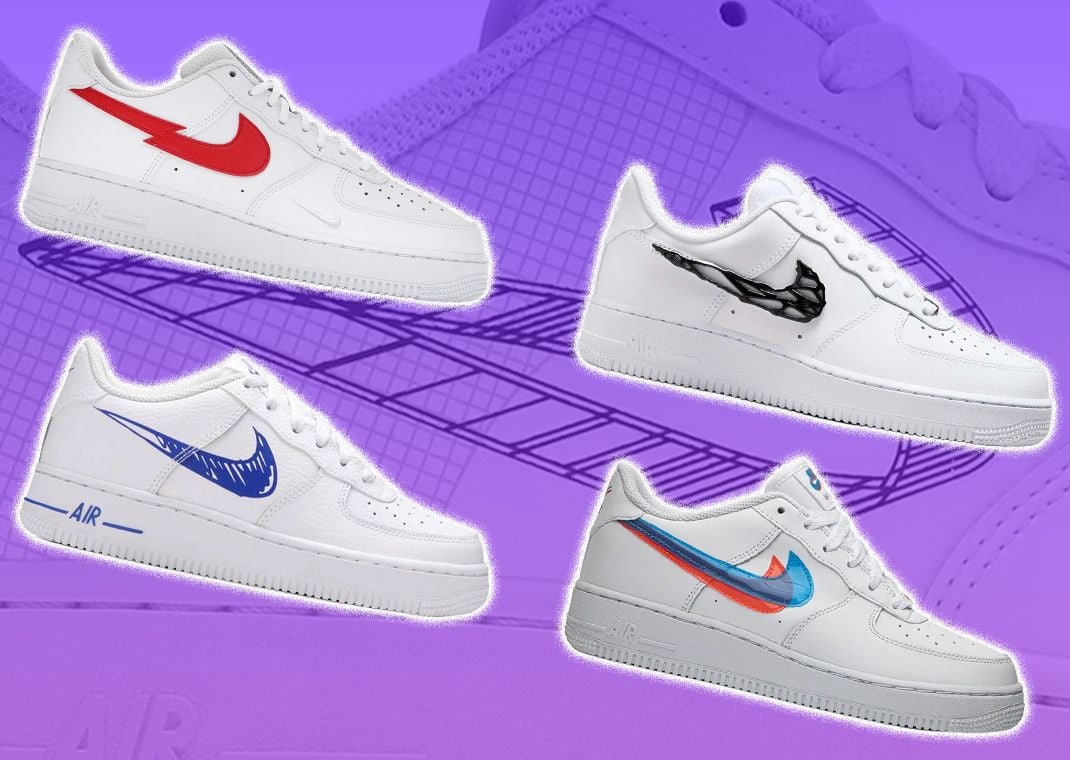
Examples: Nike Air Force 1 Euro Tour, Nike Air Force 1 Zigzag, Nike Air Force 1 Shredded Swoosh
The Air Force 1 is home to many of the Swoosh’s most iconic edits, but also the ones that did not get more than a cup of coffee in the big time. At first glance, you might be tempted to think that the Air Force 1 Euro Tour is taking a subtle dig at A BATHING APE’s star logo that features a jagged tail which some interpret as a way to skirt around the Swoosh’s own tail, but there’s no indication that is the case. Other one-off attempts at modifying the Swoosh include the implementation of a zigzag pattern, an oozing variant that looks like it could be a tie-in to Marvel anti-hero Venom, and sketches of the logo printed on the upper. As long as there are white Air Force 1s to be made, there is always room for a brand new take on the Swoosh to add some contrast.
Bulbous Detachable Swoosh
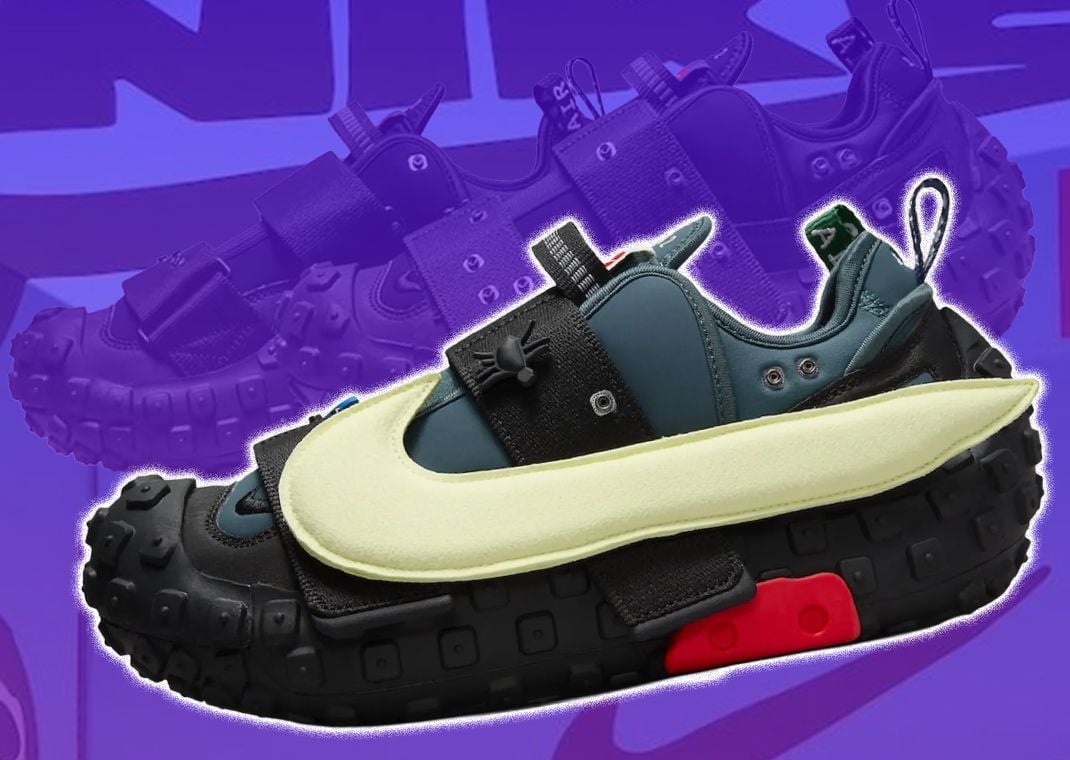
Examples: Cactus Flea Plant Market x Nike Air Flea 2
There are a number of prominent examples of Nike sneakers that have allowed you to remove the Swoosh and replace it with different colors and flourishes to unlock a personalized touch. But only one sneaker turns the Swoosh into a removable cherubic appendage and transforms the silhouette from slightly obnoxious trail walker to science project gone wrong. And we love Cactus Flea Plant Market for that. By opting for a rotund Swoosh that attaches to the sneaker via buttons instead of velcro, the Air Flea 2 becomes a cult classic instead of an overhyped experiment.
Vertical Swoosh
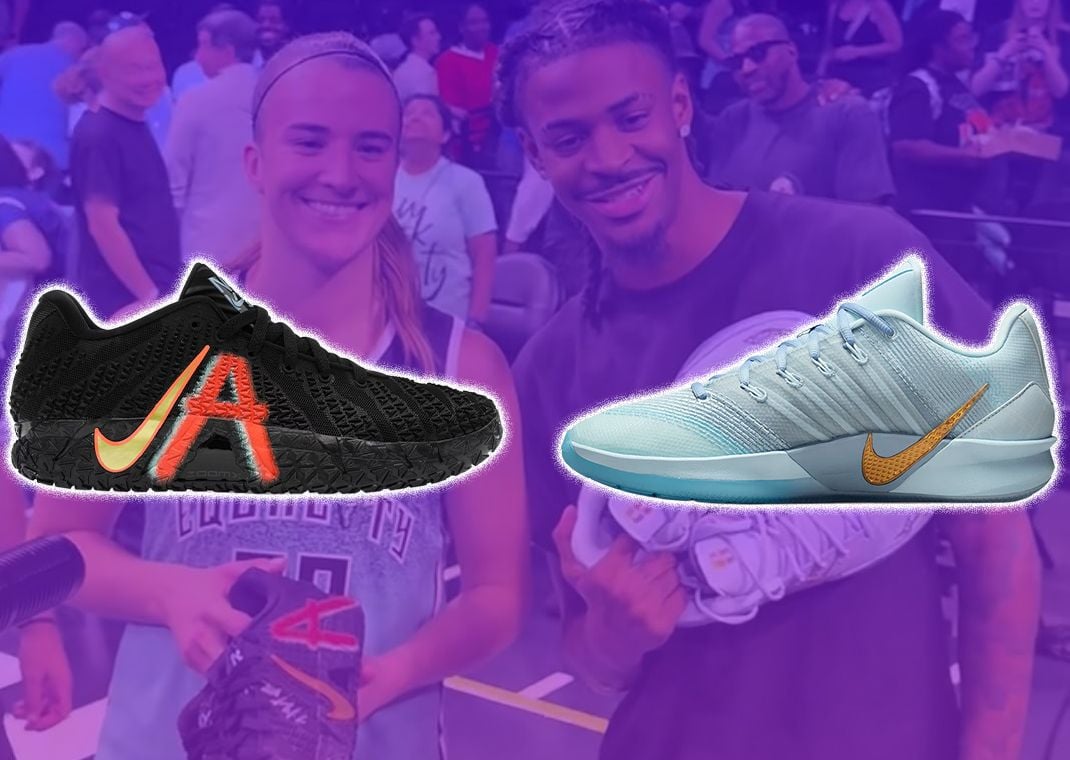
Examples: Nike Sabrina Line, Nike Metcon 6, Nike Ja 3
When Nike debuted the Sabrina 1, it didn’t take long for Sabrina Ionescu’s signature line to become one of the default hooping shoes of this era. From the low-cut profile, superior court feel, and sleek design, Sabrinas can be found just about everywhere there’s basketball to be played. What has gone slightly under the radar is the use of a vertical Swoosh on the medial. According to Nike and Sabrina, the Swoosh pointing up represents Ionescu’s upward trajectory in not only the WNBA, but the sport as a whole as her sneakers have been adopted iat every level including the NBA. This detail has appeared on every one of Sab's signature models thus far.
Since then, we have seen Nike use the vertical Swoosh to highlight women’s sports on the kits of several big-time Premier League clubs. Separating them from the Sabrinas, the kits feature a double Swoosh pointing up that celebrates the growth of women's football.
Other sneakers that have used the vertical Swoosh include a recent run of Nike Metcon trainers and most recently, the Nike Ja 3. While it’s debatable if Ja Morant is still moving onward and upward, his sneakers have certainly stepped up to the challenge with one of the most compelling designs in all of basketball in years.
Mini-Swoosh
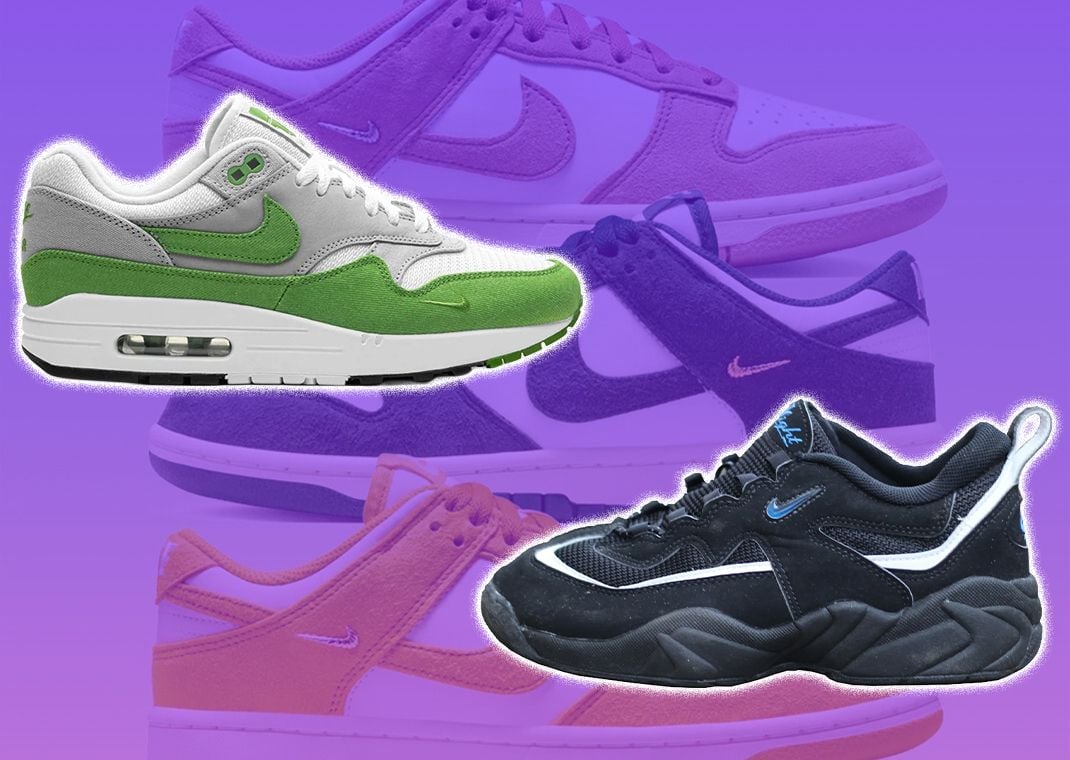
Examples: Nike Air Max 1, Nike Air Max 95, Nike Air Lambaste, Nike Shox R4
After being locked in a battle with Reebok for brand supremacy throughout the 80s, Nike would take the lead by the end of the decade and never look back. Thanks to flashy ad campaigns, iconic sneakers, and Michael Jordan, it seemed there was nothing that the Swoosh couldn’t do. And maybe that’s why by the late 80s and into the 90s, Nike’s designers were itching to see what they could do without feeling the need to put a giant Swoosh on every sneaker.
We were already seeing signs starting with the Air Jordan 2 of what Nike was capable of without putting a Swoosh on it, but it was the arrival of later Air Jordans and the era of Huaraches and Air Raids that we saw that Nike did not need to rely on it to sell sneakers.
But just because they could make sneakers without the Swoosh doesn’t mean they were about to abandon one of the most recognizable marks on the planet. Most of Nike’s output still had the Swoosh on it, but it was also time to diversify where it could be placed. The mini-Swoosh started appearing on sneakers like the Nike Air Max 95 and the Nike Air Lambaste before eventually becoming design flourishes on the Air Max 1 and Huaraches. What makes the addition of mini Swooshes on the Air Max 1 and Huarache slightly amusing is that there are now people who have Mandela Effect’d the mini Swooshes into the OG pairs and believe that they were always there the whole time.
Caitlin Clark’s CC Swoosh
Example: Nike Caitlin 1
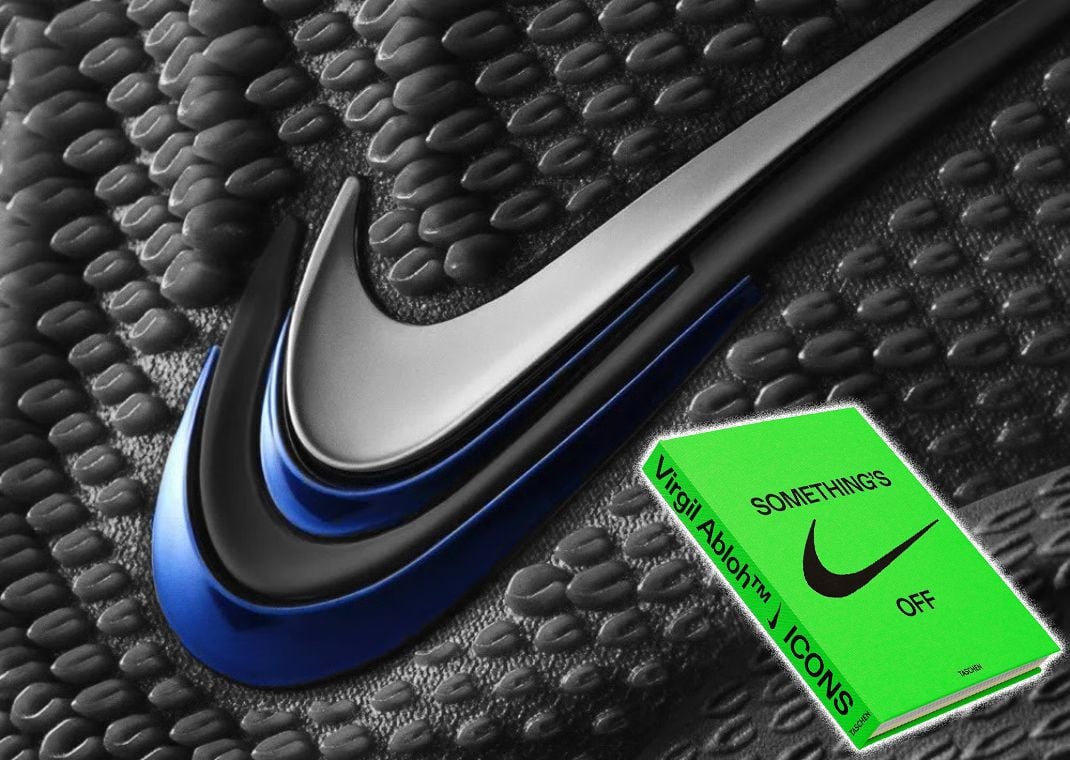
If it wasn’t obvious enough, Nike is betting big on the Nike Caitlin 1, the Swoosh, or more accurately, the Swooshes, tell the story. Now that we have finally been given a reveal, the Swooshes teased on the upper have been the subject of much speculation. Are they actually Caitlin’s initials? Are the blue and silver Swooshes a hint of her secret desire to be a Duke Blue Devil? Did I just make one of those up to see if you were still paying attention? As we wait for designer Ben Nehtongkome’s story behind the design, the Swooshes that are most intriguing are not the layered blue and silver ones in the shape that most people are familiar with, but the short and slim blues that look strikingly similar to Carolyn Davidson’s original sketch.
Reverse Swoosh
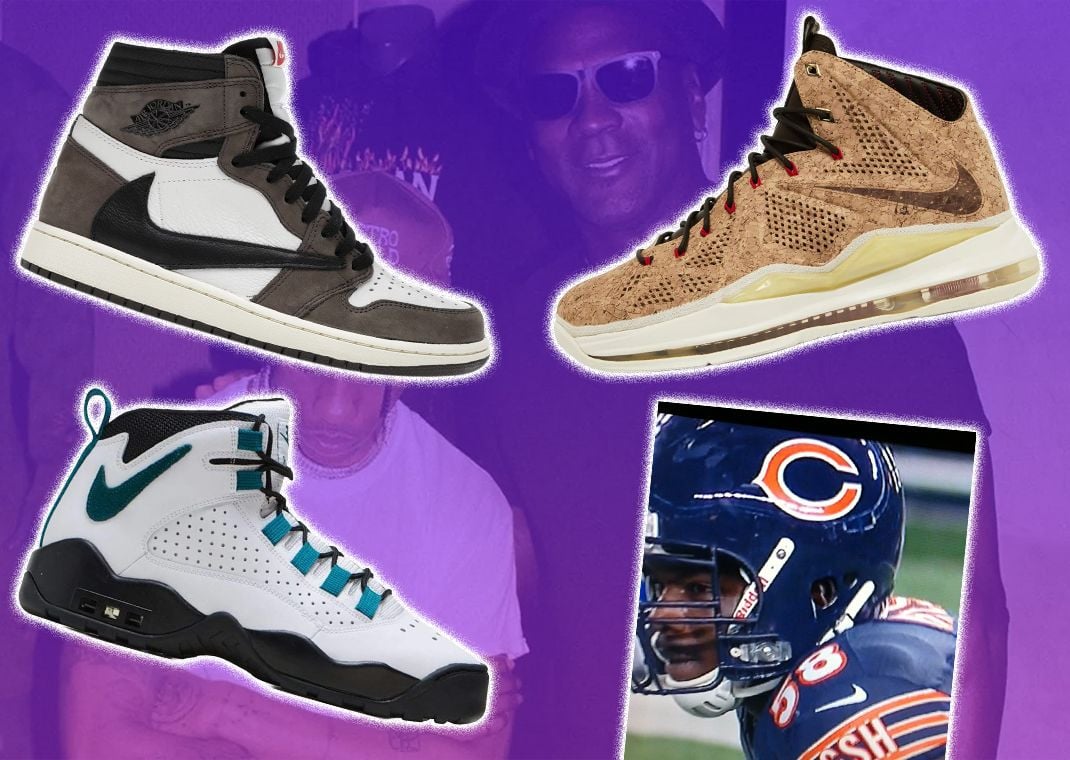
Examples: Everything Nike has ever done (but also Travis Scott x Air Jordan 1 Low)
We’re not in the business of sneakerhead purity tests at Sole Retriever, but there is something funny about having a conversation with fellow fans and dropping a benign statement like Travis Scott did not invent the reverse Swoosh. Sometimes the group will agree with you and other times there will be some who will think you have lost your mind. Typically those are younger sneakerheads who have blocked the Nike LeBron X out of their memory, but the reality is that not only did Travis not invent the reverse Swoosh, the reverse Swoosh has been with us the whole time.
The canonical direction of the Swoosh in most people’s minds (and in the Nike style guide) is based on what they’ve seen in commercials. After you’re done watching whatever genius ad Wieden+Kennedy dreamed up in their magical offices in Portland, the Swoosh will typically flash at the end and the stylized check curves from left to right like a killer Tiger Woods fade shot. However, when you look at a Nike sneaker and pick up the right shoe, the Swoosh curves from right to left on the lateral side. Turns out the reverse Swoosh is not only not new, it’s damn near ancient. Almost all of Nike’s sneakers follow this simple rule: the Swoosh is pointing to the heel. Except when they’re not. And no, La Flame did not come up with that idea.
Before Travis’ fans claimed the reverse Swoosh as their symbol of excellence/defiance, it had been boggling people’s minds for decades. In the 90s, when Nike outfitted several NFL teams, the Swoosh curved left to right on both sleeves of the jersey. When they acquired the license for every team in the 2010s, the Swoosh pointed to the shoulder, confusing millions on television whenever a player’s right side was shown.
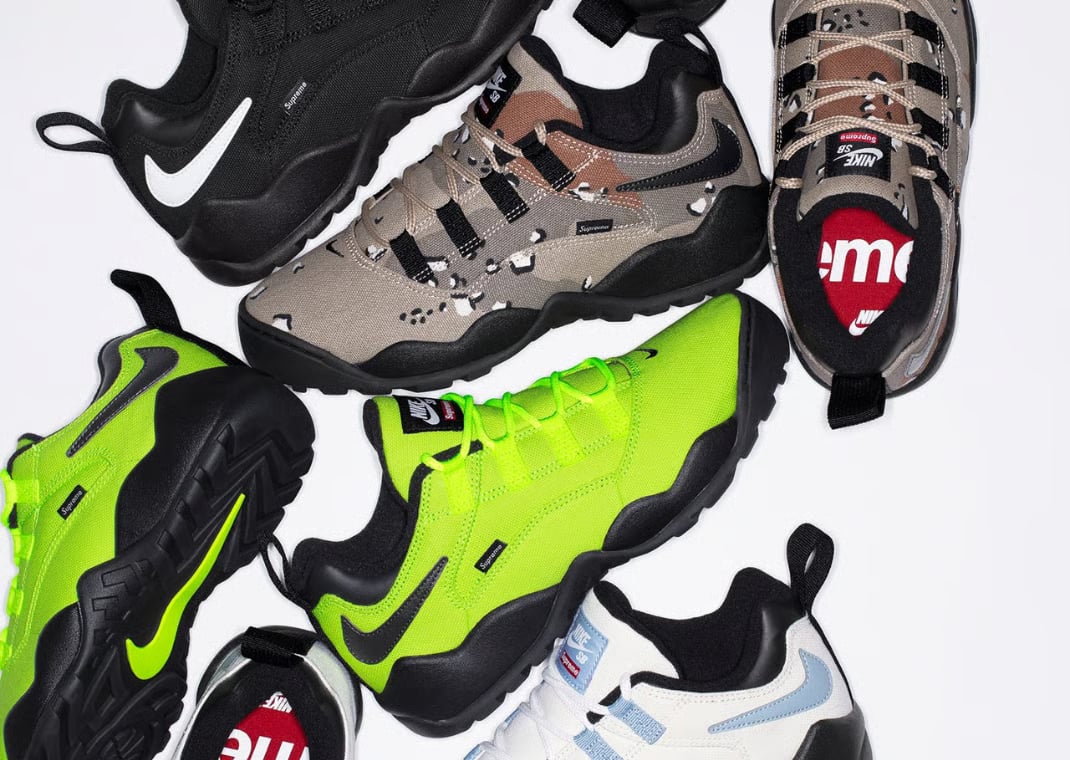
One of the first sneakers to adopt the reverse Swoosh and point towards the toes instead of the heel is the Nike Air Darwin, a pseudo-signature shoe for Dennis Rodman, an iconoclast in his own right. The Darwin wasn’t a mega hit, but it gained cult status along with other sneakers that would flip the Swoosh including Andre Agassi’s Nike Air Flare, the rugged outdoor hoops-ready Nike Air Ndestrukt (not to be confused with the Shake Ndestrukt that Rodman did wear with a Swoosh that was facing the “right way”) and more.
The reverse Swoosh would be revisited with the Nike LeBron X before appearing in a number of Nike Basketball signatures like the Nike PG 2 and Nike Kobe AD NXT before becoming a staple of Giannis Antetokounmpo’s Zoom Freak line and his more popular Immortality takedown series.
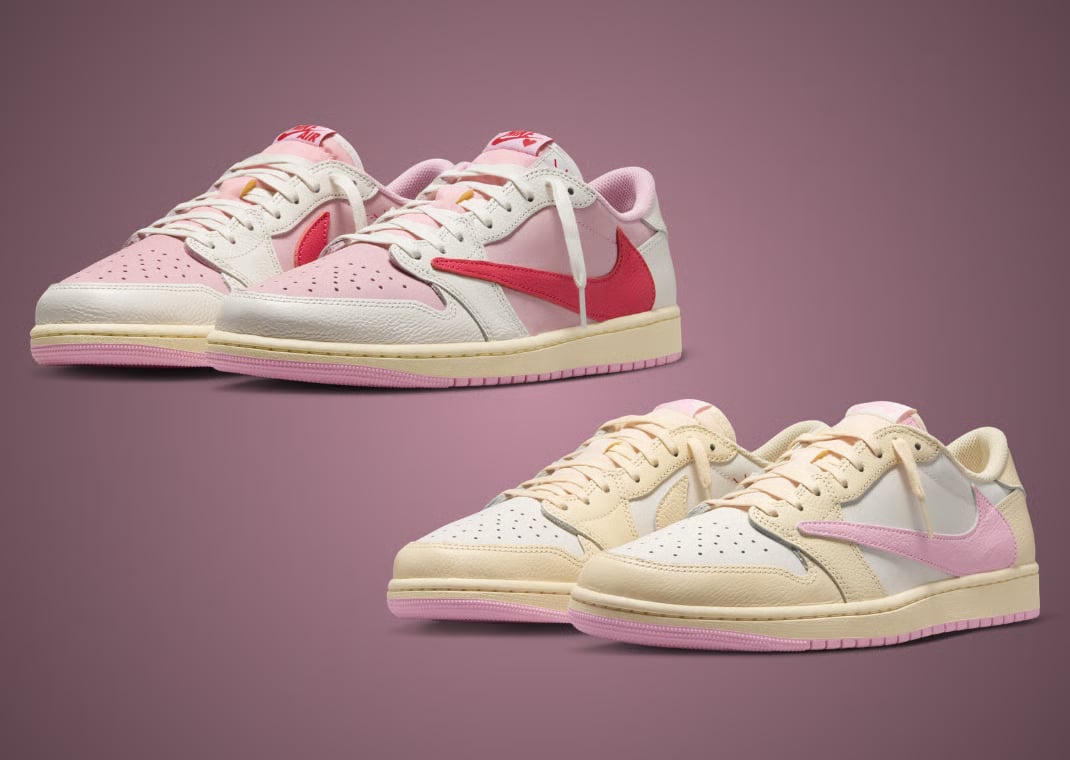
So the answer to the question of whether or not Travis Scott created the reverse Swoosh is a resounding no. But what he did do was make the reverse Swoosh his mark on the company. Instead of kicking off his partnership with Jordan Brand with a new silhouette like the Jumpman Jack with a reverse Swoosh, he instead plastered it on the Air Jordan 1.
It was so visually jarring to see the Air Jordan 1 from that lens that it either angered you or opened your mind to the possibility that a sneaker that’s been gimmicked to death still has new tricks that it can pull. Combine that with the height of the Jordan 1s, sneaker culture’s rise to mainstream both as a lifestyle and a business, and Travis’s star power, and that’s how you get kids thinking Cactus Jack is some sort of revolutionary. He’s not a genius for inventing the reverse Swoosh, but he is supremely clever for making it undeniably his.
Perforated Swoosh
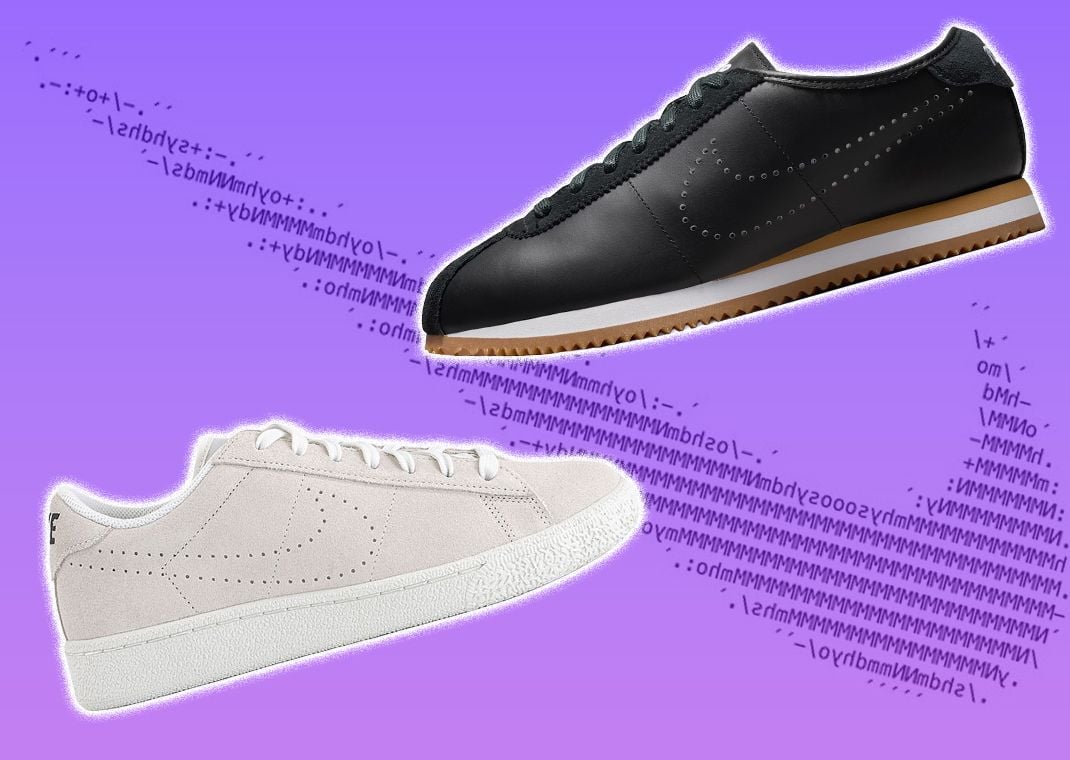
Examples: Nike Cortez, Nike Tennis Classic
Have you ever been in a situation where you just had to try something and then when you did, you were satisfied and didn’t need to see more? This is one of those times. Grand opening, grand closing. At least it works on Virgil Abloh's Air Jordan 1, which features barely visible perforations for where the Swoosh would traditionally be.
From video game journalism to veteran of the sneaker blog era to podcasting about well, everything, Juan is smiling through it all and can't believe this is his life. His current hot take is that people are really underrating the Psyduck trading card market. Email: juan@soleretriever.com Instagram | Twitter | Bluesky | Threads : @ezyville